 listicle
Book a Leadership Keynote Speaker for 2026
Table of Contents
- What Makes a Great Leadership Keynote Speaker
- Leadership Keynote Speaker Fees and Budget Planning
- Questions to Ask a Keynote Speaker Before Booking
- Average Keynote Speaker Duration and Event Format
- How to Book a Leadership Keynote Speaker
- Speaker Vetting Checklist for Your Event
- Measuring ROI and Impact From Your Leadership Keynote Speaker
- Conclusion
Last Updated: August 6, 2026
What Makes a Great Leadership Keynote Speaker
A great leadership keynote speaker combines authentic expertise with the ability to move an audience from passive listening to active commitment. Credibility matters more than charisma, the best speakers have lived the challenges they discuss, navigating enterprise transformation or facing the exact succession planning problems keeping your CHRO awake at night.
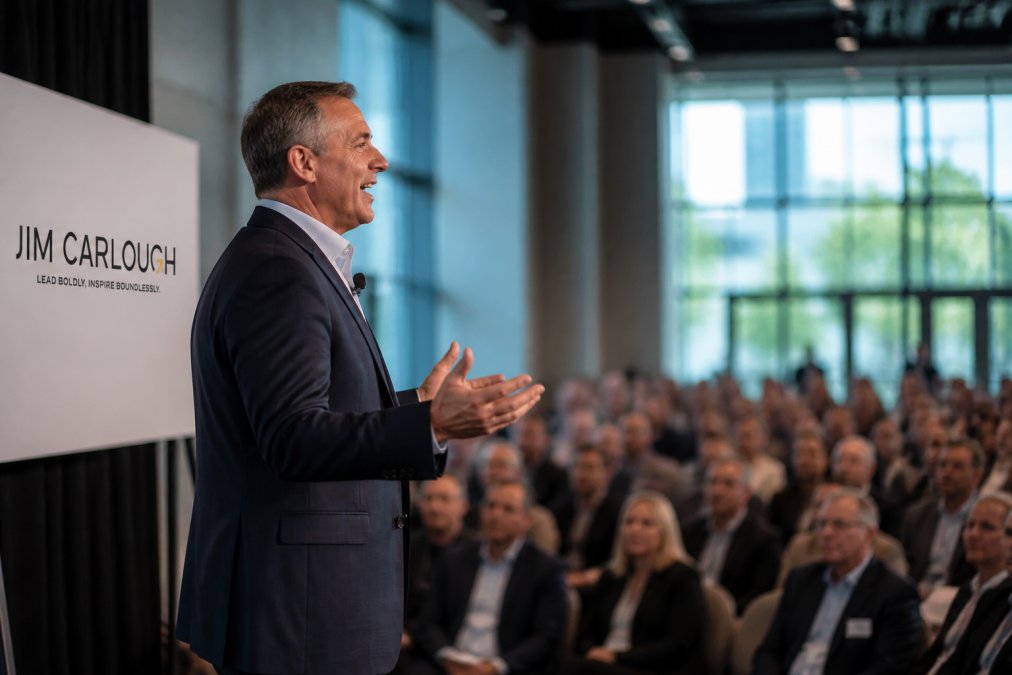
Actionability separates speakers who inspire from speakers who change behavior. A great keynote speaker doesn't just tell stories; they give the room specific language, frameworks, or decision-making tools people can use Monday morning. Jim Carlough, for instance, structures keynotes around his six foundational pillars of leadership, which teams can immediately apply to their own challenges.
The best speakers address your organization's actual gap. If your team struggles with micromanagement, you need someone who speaks to trust and delegation with brutal honesty about why leaders default to control. Finally, great speakers understand that leadership has changed. A speaker worth booking will address how to build influence and presence when your authority comes from character, not just title.
Leadership Keynote Speaker Fees and Budget Planning
Keynote speaker fees vary dramatically based on speaker tier, experience level, and whether you book directly or through a bureau.
Speaker Tier and Fee Ranges
Emerging or specialized speakers typically charge between $5,000 and $15,000 per engagement. Mid-tier speakers with published books, speaking experience at major conferences, or significant corporate transformation credentials generally fall in the $15,000 to $50,000 range. This tier includes experts like Chris Dyer, a four-time bestselling author and former Inc. 5000 CEO who focuses on workplace culture and team building. Celebrity or marquee speakers can command $50,000 to $150,000 or more per engagement and often require booking 9 to 18 months in advance.
Bureau Commissions and Direct Booking
When you book through a speaker bureau like Washington Speakers Bureau, BigSpeak, or Leading Authorities Inc., the bureau typically adds a commission of 20-30% to the speaker's base fee. However, bureaus handle logistics, contracts, technical setup, and speaker coordination. Direct booking eliminates the middleman fee but requires you to handle all logistics and contractual details yourself.
Hidden Costs Beyond the Speaker Fee
Travel expenses, flights, hotels, ground transportation, can add $2,000 to $10,000 depending on distance. Always clarify whether the quoted fee includes travel. Technical requirements vary by speaker; some bring their own AV support while others expect your venue to provide screens and sound. Pre-event customization can incur additional fees of $1,000 to $5,000 if you want a speaker to tailor their keynote to your organization's specific challenges.
Questions to Ask a Keynote Speaker Before Booking
About Their Expertise and Approach
Ask: "What specific leadership challenges have you helped organizations address?" This separates speakers who've done the work from those who've only read about it. A strong answer references actual client situations or specific frameworks they've developed.
Ask: "How do you customize your keynote for our specific industry and culture?" A speaker should ask about your succession planning challenges and culture gaps before finalizing content.
Ask: "What frameworks or tools do you provide that attendees can implement immediately?" This ensures they're equipping your team, not just inspiring them. Jim Carlough, for example, brings his six foundational pillars of leadership.
Ask: "Do you have case studies or examples from our industry?" If a speaker has worked with similar organizations, they'll understand your context better.
About Logistics and Delivery
Ask: "What are your technical and staging requirements?" Understanding their needs prevents technical failures that undermine their message.
Ask: "How long is your keynote, and is it adjustable?" Standard keynotes run 45 to 90 minutes, but some speakers have fixed presentations while others can adjust length based on your event schedule.
Ask: "Do you take questions from the audience, and how do you handle difficult questions?" If your team culture values dialogue, you want a speaker comfortable with real-time interaction.
Ask: "What's your cancellation policy, and what happens if technical issues arise?" Understand the terms if something goes wrong.
About Your Event and Audience
Ask: "How many people will be in the room, and what's their role level?" A keynote for 200 frontline managers requires different content than one for 50 C-suite executives.
Ask: "What's the biggest challenge your team is facing right now?" A good speaker will ask probing questions about your culture and leadership gaps rather than launching into a canned response.
Ask: "What outcome would make this keynote successful for your organization?" This forces you to define success beyond "people felt inspired" and helps the speaker design their content accordingly.
Average Keynote Speaker Duration and Event Format
The standard keynote lasts 45 to 90 minutes, but the ideal length depends on your event format and audience energy.
Typical Keynote Lengths
A 45-minute keynote works well for events with multiple speakers or limited time. A 60-minute keynote is the sweet spot for most corporate events, allowing a speaker to tell stories, introduce a framework, and give audiences time to absorb the message. A 90-minute keynote works for signature events or annual leadership summits where the keynote is the centerpiece.
Format Variations That Affect Duration
A traditional keynote is one speaker on stage, working well for inspirational or thought leadership content. A fireside chat or moderated conversation format typically runs 30 to 45 minutes and feels more conversational. A keynote with interactive breakouts extends the experience, moving people from passive listening to active application. A panel discussion format typically runs 45 to 60 minutes with three to four speakers discussing a topic.
Audience Energy and Attention Span
Morning keynotes can run longer because audiences are fresh. An afternoon keynote, especially after lunch, should be tighter at 45 to 60 minutes because attention naturally dips. Virtual keynotes should be shorter than in-person events. A 45-minute virtual keynote with a 10-minute Q&A is more effective than a 75-minute virtual presentation.
How to Book a Leadership Keynote Speaker
Booking a leadership keynote speaker involves several steps, from defining your needs to negotiating terms and managing logistics.
Step 1: Define Your Event Goals and Audience
Before you contact any speaker, be clear about what you're trying to accomplish. Are you launching a leadership development initiative? Addressing a specific cultural challenge like micromanagement or lack of trust? Write down your event's core objective in one sentence. Next, define your audience and their biggest frustration with current leadership.
Step 2: Identify Potential Speakers
You have three main routes: direct speaker websites, speaker bureaus, or recommendations from your network. Direct speaker websites work well if you already know who you want. Speaker bureaus maintain rosters of speakers across many topics and can help match your needs to available talent. Network recommendations often surface speakers who deliver exceptional results for your specific context.
Step 3: Evaluate Speakers Against Your Criteria
Watch video clips of their speaking. Read their books or articles. Check testimonials from organizations similar to yours. Pay attention to how they talk about leadership and whether their approach aligns with where you want your organization to go.
Step 4: Contact the Speaker or Bureau
If you're booking directly, contact the speaker's team with your event details: date, location, audience size, duration, and your core objective. If you're using a bureau, describe your event and ask them to suggest speakers who fit your criteria.
Step 5: Negotiate Terms
Discuss fee, travel, customization, and logistics. Clarify whether the quoted fee includes travel. Ask about customization fees. Discuss cancellation policies and technical requirements.
Step 6: Finalize Logistics
Coordinate with the speaker's team on travel dates, hotel preferences, ground transportation, and special requests. Provide the speaker with detailed information about your event, audience demographics, key challenges, and the tone you want. Schedule a pre-event call if customization is part of the agreement.
Speaker Vetting Checklist for Your Event
| Evaluation Criteria | What to Look For | Red Flags |
|---|---|---|
| Relevant Expertise | Speaker has direct experience with your industry or leadership challenge | Generic motivational content with no industry-specific examples |
| Credibility & Track Record | Published author, significant corporate transformation experience, or recognized thought leadership | Only speaks at small local events; no published work or case studies |
| Customization Willingness | Speaker asks about your organization and tailors content | Insists on delivering their standard keynote regardless of your needs |
| Audience Engagement | Video clips show the speaker connecting with audiences; they invite questions or interaction | Reads from slides; minimal eye contact or audience connection |
| Practical Frameworks | Provides specific tools, language, or frameworks attendees can use immediately | Inspirational but vague; no actionable takeaways |
| Speaking Quality | Clear delivery, good pacing, appropriate energy level | Monotone delivery; too fast or too slow; difficult to understand |
| References & Testimonials | Strong testimonials from organizations similar to yours; willing to provide references | Vague testimonials; reluctant to provide references |
| Technical Proficiency | Comfortable with virtual delivery if needed; has backup plans | Unfamiliar with Zoom or virtual events; no backup for technical issues |
| Values Alignment | Speaker's approach to leadership aligns with your organizational values | Approaches leadership in ways that contradict your culture |
| Availability & Timeline | Available on your event date; responsive to communications | Difficult to reach; frequently unavailable; vague about scheduling |
Before finalizing a booking, ask the speaker's previous clients: "What surprised you about working with this speaker?" and "What would you do differently if you could book them again?"
Measuring ROI and Impact From Your Leadership Keynote Speaker
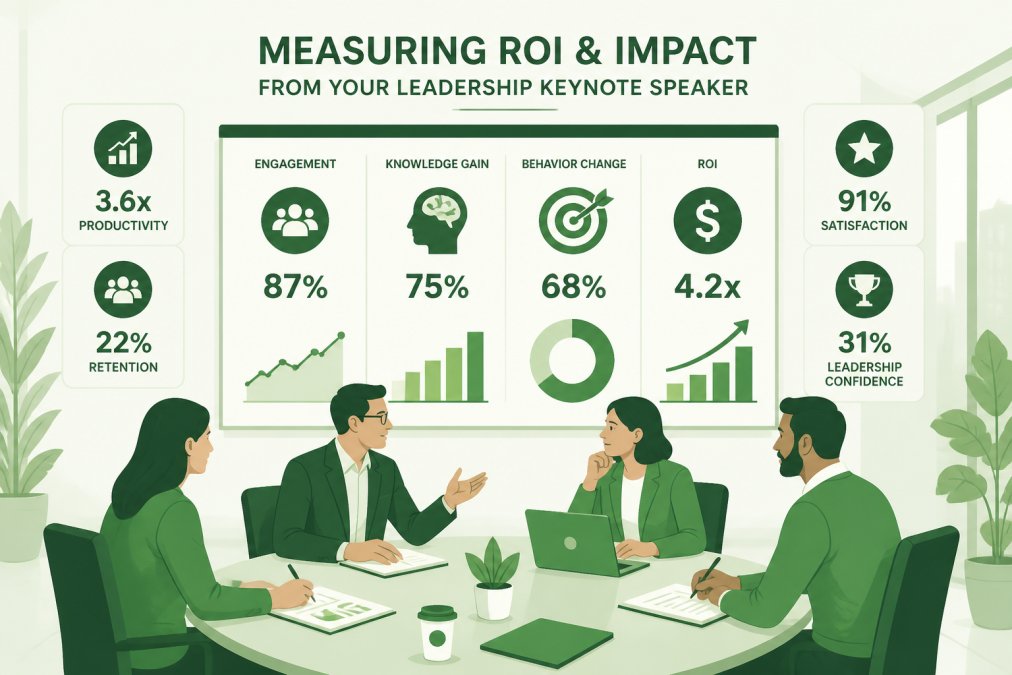
A keynote speaker is an investment, and you should measure whether it delivered return. ROI isn't just attendance numbers; it's behavioral change and business impact.
Define Success Metrics Before the Event
Work with your speaker and CHRO to articulate what success looks like. Are you shifting how leaders think about delegation? Success might be measured by changes in employee engagement scores on psychological safety. Are you building confidence in emerging leaders? Success might be tracked through promotion rates or readiness assessments.
Avoid vanity metrics. "People felt inspired" is not measurable. "Leaders report greater confidence in having difficult conversations about performance" is measurable.
Immediate Post-Event Measurement
Send a brief survey within 24 hours asking:
- What was the most valuable insight you took from this keynote?
- What's one thing you'll do differently as a leader because of what you heard?
- How relevant was this content to your current leadership challenges? (Rate 1-10)
- Would you recommend this speaker to other organizations?
30-Day and 90-Day Follow-Up
Schedule a 30-day pulse survey asking whether attendees have implemented frameworks or changed their thinking about leadership. At 90 days, measure business outcomes. If your keynote focused on building trust, check employee engagement surveys on psychological safety. If it addressed succession planning, track whether leaders have identified and begun developing high-potential talent.
Qualitative Feedback from Leadership
Ask your leadership team directly 60 to 90 days after the keynote: "What's changed in how you approach your team?" and "Have any frameworks influenced your leadership decisions?" These conversations often surface impact that surveys miss.
Cost-Benefit Analysis
Calculate the true cost of the keynote and weigh it against measurable outcomes: improved engagement scores, faster promotion of emerging leaders, reduced turnover, or improved team performance metrics. Use this data to inform your next speaker decision.
Booking a leadership keynote speaker is a strategic decision, not a checkbox task. The right speaker can shift how your organization thinks about leadership identity and accelerate the development of emerging talent. Jim Carlough brings 30+ years of enterprise transformation experience and a character-driven approach to leadership that moves beyond titles to authentic influence. His focus on intentional identity development directly addresses the gaps most organizations face when building leadership capability. Learn more about Jim Carlough's keynote and coaching approach to explore how his expertise might align with your next leadership event or development initiative.
Frequently Asked Questions
How much does it cost to book a leadership keynote speaker?
Leadership keynote speaker fees vary widely based on speaker experience, reputation, and event requirements. Emerging speakers may charge $5,000-$15,000, while established thought leaders typically range from $15,000-$50,000 or more. Celebrity speakers and marquee names can exceed $100,000. Direct booking often costs less than booking through a speaker bureau, which typically adds 20-30% commission. For current pricing and custom quotes, contact speakers or bureaus directly.
How far in advance should you book a keynote speaker for a 2026 event?
Book mid-tier and emerging speakers 2-4 months in advance to secure availability and allow time for customization. For marquee or celebrity speakers, plan 6-12 months ahead due to high demand. Early booking also gives you time to align the speaker's message with your event theme, coordinate logistics, and promote the speaker to attendees. Last-minute bookings may limit your options and increase costs.
What questions should I ask a keynote speaker before booking?
Ask about their customization process, audience interaction methods, technical requirements, cancellation policies, and how they measure impact. Request references from similar events and examples of how they've addressed your industry's specific challenges. Clarify whether they provide pre-event materials, post-event resources, or follow-up coaching. Understanding their approach to topics like leadership identity, team engagement, and organizational culture ensures alignment with your event goals.
What is the typical duration of a leadership keynote presentation?
Most keynotes run 45-60 minutes, with 60 minutes being the standard for corporate events. Some speakers offer shorter 30-40 minute presentations for breakfast sessions or extended 90-minute formats with Q&A and interaction. Confirm the exact duration when booking, as it affects event scheduling and speaker availability. Longer presentations allow for deeper audience engagement and storytelling, while shorter slots work well for multi-speaker conferences or concurrent sessions.
This article was written using GrandRanker